

Warming up before stretching takes just 5 to 10 minutes and involves light cardiovascular activity that raises your body temperature and increases blood flow to your muscles. The best approach combines gentle movement like brisk walking, light jogging, or jumping jacks with dynamic movements that gradually prepare your muscles, tendons, and joints for deeper stretches. This simple preparation reduces your injury risk and makes your stretching routine significantly more effective.
Most people skip this step or jump straight into static stretches with cold muscles, which can actually increase the chance of strains and pulls. Your muscle fibers need warmth to become pliable. Think of it like taffy: cold taffy snaps when you pull it, but warm taffy stretches easily without breaking. Your muscles work the same way.
The science behind warming up is straightforward. Light activity increases your core body temperature by one to two degrees, which triggers better oxygen delivery to your muscles and improves the elasticity of your muscle fibers. Your nervous system also becomes more responsive, enhancing your range of motion during stretches.
Whether you’re preparing for a workout, recovering from a long day at your desk, or starting a dedicated flexibility routine, the warmup phase sets you up for success. You don’t need special equipment or a gym membership. Your own body weight and a small space are enough to get your blood pumping and your muscles ready.
This guide walks you through exactly what to do, in what order, and how to know when you’re ready to stretch safely and effectively.
Why You Should Never Stretch Cold Muscles
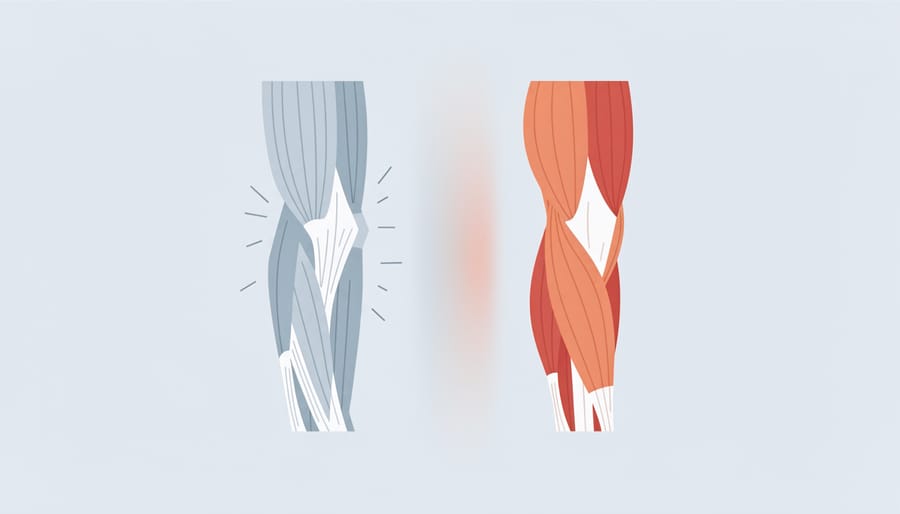
Your muscles behave like elastic bands that have been left in the freezer, when they’re cold, they’re stiff, brittle, and far more likely to snap under tension. Stretching without warming up first puts your muscle fibers at serious risk because cold tissue simply doesn’t have the pliability needed to lengthen safely.
Here’s what’s happening inside your body: when muscles are at rest and haven’t been warmed up, blood flow is minimal and the muscle fibers remain tight and contracted. The protein structures within your muscles, mainly collagen and elastin, are less flexible at lower temperatures. Think of cold taffy versus warm taffy: one breaks, the other stretches. When you pull cold muscle fibers into a stretch, you’re asking rigid tissue to elongate beyond its current capacity, which can lead to microtears, strains, or even complete muscle tears.
The Mayo Clinic and other medical experts consistently advise people to avoid stretching cold muscles for exactly these reasons. When you warm up properly, your heart rate increases, pumping more oxygen-rich blood to your muscles. This elevated blood flow raises muscle temperature by several degrees, making the tissue more supple and responsive.
It’s crucial to understand that warming up and stretching serve different purposes and must happen in sequence. Warming up prepares your cardiovascular system and raises your core temperature through movement. Stretching, which comes after, improves flexibility and range of motion in muscles that are already warm and ready to lengthen. Reversing this order is like trying to bend a cold rubber band, it might work once or twice, but eventually something gives.
What You Need to Warm Up Effectively
Good news: you don’t need a fancy gym or expensive gear to warm up properly. Most people already have everything required, and the optional items just add variety to your routine.
Essential Items:
- Comfortable, breathable clothing that allows full range of motion
- Supportive athletic shoes appropriate for your activity (running shoes for cardio-focused warm-ups, cross-trainers for mixed movement)
- An open space of at least 6×6 feet where you can move freely in all directions
- A timer or watch to track your warm-up duration
- Water bottle for staying hydrated throughout your session
Optional Equipment to Enhance Your Warm-Up:
- Jump rope for efficient cardiovascular activation
- Light resistance bands for adding gentle tension to dynamic movements
- Yoga mat for floor-based exercises and added cushioning
- Small hand weights (2-5 pounds) to incorporate upper body activation
- Foam roller for targeted muscle preparation before movement
Whether you’re warming up in your living room before a home yoga session or preparing for a gym workout, these basics cover you. The essentials ensure safety and proper movement, while the optional equipment lets you customize your warm-up as your fitness journey progresses. Start with what you have, your body and a bit of space, and build from there as needed.

Safety Guidelines Before You Begin
Before you start any warm-up routine, understanding your baseline fitness level helps you choose the right intensity. If you’re new to exercise or returning after a break, begin conservatively, your warm-up should feel easy, not challenging. Listen to your body’s signals throughout: a proper warm-up creates a light sweat and gentle muscle activation, never sharp pain or extreme discomfort.
Certain health conditions require extra caution. If you have cardiovascular issues, diabetes, arthritis, or chronic pain conditions, talk with your doctor before starting a new warm-up routine. They can help you identify safe modifications. Women who are pregnant should avoid overheating and skip movements that involve lying flat on the back after the first trimester; gentle walking and modified dynamic movements work well instead. During menstruation, some women experience lower energy or increased joint laxity, reducing intensity slightly during these days is perfectly reasonable.
Age matters too. Older adults benefit from longer, gentler warm-ups since tissues take more time to become pliable. Teenagers and younger adults typically warm up faster but still shouldn’t rush the process. Stay hydrated before you begin; drink water 30 minutes prior rather than chugging it right before moving. Dehydration makes muscles more prone to cramping and reduces your body’s ability to regulate temperature effectively.
Pay attention to your environment as well. Cold weather requires a longer warm-up, while hot conditions mean you’ll need less time but more hydration breaks. Adjust your routine to match the conditions rather than following a rigid script every time.
5 Steps to Warm Up Your Body Before Stretching
Step 1: Start with Light Aerobic Activity (5-10 Minutes)
Begin your warm-up with simple aerobic activity that gets your blood flowing without exhausting you. This phase serves one primary purpose: raising your body temperature and heart rate gradually so your muscles receive more oxygen-rich blood.
Choose any activity that uses large muscle groups and feels manageable. Brisk walking works perfectly, just pick up your normal pace until you feel purposeful movement. If you’re at home, march in place while swinging your arms naturally. At the gym, hop on a stationary bike at an easy resistance or use a treadmill at a comfortable walking speed. Light jogging suits experienced exercisers, but only if it feels effortless right now.
Your target intensity is conversational pace. You should breathe more deeply than at rest but still hold a full conversation without gasping between words. If you can’t talk comfortably, slow down. This isn’t the workout, it’s preparation.
Watch for these readiness signs as you move: your skin feels warmer, you might notice light perspiration on your forehead or neck, and your breathing deepens noticeably. Most people reach this state within 5-7 minutes, though cold environments or morning workouts may require the full 10 minutes. When you feel a gentle warmth spreading through your muscles and your body responds more easily to movement, you’re ready for the next phase.
Step 2: Perform Dynamic Movements (3-5 Minutes)
After your light aerobic activity gets your blood flowing, it’s time to move your joints through their full range of motion with controlled, deliberate movements. Unlike static stretches where you hold a position, dynamic stretching warms up your muscles through active movement, preparing them for the demands ahead.
Start with your lower body. Perform 10-15 leg swings forward and back, holding onto a wall for balance, then switch to side-to-side swings to open up your hips. Add walking lunges with a gentle twist to engage your core and legs simultaneously.
For your upper body, make large arm circles both forward and backward, gradually increasing the size. Follow with torso rotations, keeping your hips steady while you twist your upper body from side to side. This loosens your spine and shoulders.
Hip circles are perfect for full-body integration. Stand with feet shoulder-width apart and rotate your hips in wide circles, first clockwise then counterclockwise, 8-10 times each direction. You’ll feel this wake up your lower back, hips, and core all at once. Keep these movements smooth and controlled, never forcing past your comfortable range.
Step 3: Activate Your Core and Stabilizers (2-3 Minutes)
Now that your body’s warm and moving, it’s time to wake up the muscles that keep you stable during stretches. Your core and stabilizer muscles act as your body’s foundation, and activating them prevents compensation patterns that can lead to injury.
Start with pelvic tilts. Stand with feet hip-width apart, hands on your hips. Gently tilt your pelvis forward and back, moving only through your lower spine. This primes your deep abdominal muscles and lower back stabilizers. Aim for 10-12 slow repetitions.
Next, move to cat-cow stretches if you have floor space. On hands and knees, alternate between arching your back and rounding it upward. This movement activates your entire spinal support system while maintaining the warmth you’ve built. Complete 8-10 cycles, coordinating each movement with your breath.
Finish with simple standing balance work. Lift one foot slightly off the ground and hold for 15-20 seconds, then switch sides. Your ankles, hips, and core all engage to keep you steady, which means these stabilizers will support you properly when you move into deeper stretches.
When these muscles fire correctly, your joints stay protected and your stretches become more effective.
Step 4: Increase Range of Motion Gradually (2-3 Minutes)
After activating your core, it’s time to gradually increase your range of motion in the major joints you’ll be stretching. This step bridges the gap between gentle warm-up movements and your actual stretching routine.
For shoulders, perform controlled arm circles, start small and gradually widen the circles. Reach one arm overhead and gently pull it across your chest with the other hand, holding for just 2-3 seconds before switching sides. Men often carry tension in their shoulders from upper body training, so keep movements smooth rather than forcing the range.
For hips, try standing hip circles: place hands on your hips and make slow, controlled circles with your pelvis, 5-6 rotations each direction. Women typically have greater natural hip mobility, but everyone benefits from gentle progression. Add controlled leg swings forward and back, using a wall for balance if needed.
For your spine, perform standing side bends, reaching one arm overhead and leaning gently to the opposite side. Follow with slow torso rotations, keeping your hips stationary while your upper body turns left and right.
Finish with ankle circles, lifting one foot and rotating your ankle slowly in both directions. These controlled movements prepare your joints for deeper stretching without straining cold connective tissue.
Step 5: Check Your Body’s Readiness (1 Minute)
Before you transition to your stretching routine, take 30 to 60 seconds for a quick body scan. This is your verification checkpoint, think of it as a green light check before you start deeper flexibility work.
Your body will tell you clearly whether you’re ready. You should feel noticeably warmer than when you started, particularly in your core and the larger muscle groups you’ll be stretching. Many people notice a light sweat forming, especially around the hairline, neck, or chest. Your breathing should be slightly elevated but still comfortable, you can talk in full sentences without gasping.
Try this quick test: move each major joint through a comfortable range of motion. Your shoulders, hips, knees, and spine should feel pliable rather than stiff or resistant. If you reach for your toes or rotate your torso, the movement should feel smoother than it did five minutes ago. Women often notice this readiness sooner due to naturally higher flexibility, while men may need an extra minute or two, particularly in the hips and hamstrings.
If you still feel cold, stiff, or your heart rate hasn’t increased, spend another two to three minutes on light movement before stretching.
Common Warm-Up Mistakes to Avoid
Even experienced fitness enthusiasts sometimes fall into warm-up traps that can undermine their stretching sessions. The good news is that recognizing these mistakes is the first step toward building better habits that will serve your body well for years to come.
Here are the most common warm-up errors and how to fix them:
- Rushing through your warm-up in under three minutes, Take the full 10-15 minutes your body needs to properly prepare; think of it as an investment in injury-free movement
- Skipping the warm-up entirely when short on time, Even a quick two-minute routine of marching in place and arm circles beats going straight into stretching cold
- Starting with static stretching instead of movement, Save those held stretches for after your workout; begin with dynamic movements that get your blood flowing
- Jumping into high-intensity exercises too quickly, Gradually build from gentle movements to more vigorous activity rather than shocking your system
- Wearing the same gear regardless of temperature, Layer up in cold weather so your muscles can warm effectively, and adjust your warm-up duration when it’s chilly outside
- Following the same routine without listening to your body, Some days you’ll need more time to feel ready, especially if you’re stiff from yesterday’s workout or just rolled out of bed
The key is approaching your warm-up with intention rather than treating it as a box to check. When you notice yourself making one of these mistakes, simply pause and adjust. Your body will thank you with better performance and fewer aches.
Customizing Your Warm-Up for Different Goals
Your warm-up needs to match your specific activity and fitness level to be truly effective. A runner preparing for a morning jog requires different movements than someone about to practice yoga or lift weights.
For yoga sessions, focus on joint mobilization with gentle hip circles, shoulder rolls, and spinal twists. Since yoga itself involves stretching, your warm-up can be lighter, five minutes of walking followed by sun salutations works beautifully. Runners need more emphasis on the lower body: try butt kicks, high knees, and gradual acceleration from walking to light jogging. Your muscles need to rehearse the movement patterns they’re about to perform intensely.
Strength training demands a more comprehensive approach. Start with general cardio, then perform lighter versions of your planned exercises, empty bar squats before loaded squats, for instance. This prepares both your muscles and your nervous system for the work ahead.
Beginners should extend the light aerobic phase to ten minutes and keep dynamic movements simple and controlled. You’re still learning body awareness, so prioritize quality over complexity. Athletes can shorten the basic warm-up slightly but should add sport-specific drills that mimic game situations.
Older adults benefit from an extra-gentle approach with more time spent on joint mobility. Women often have greater natural flexibility in hips and shoulders, so you might reduce stretching time there while focusing on areas that tend toward tightness. Men typically carry more tension in hamstrings, hip flexors, and shoulders, allocate extra warm-up attention to these zones.
Listen to your body’s signals and adjust accordingly. What works perfectly for someone else might need tweaking for your unique needs.
Frequently Asked Questions
How long should I warm up before stretching?
Aim for 5-10 minutes of light aerobic activity followed by 5-8 minutes of dynamic movements and activation exercises. Your total warm-up should last 10-15 minutes, though you might need slightly longer in cold weather or if you’re particularly stiff.
Can I skip the warm-up and just stretch?
No, stretching cold muscles significantly increases your risk of strains and tears. Your muscles need increased blood flow and temperature to become pliable and safe to stretch, which only happens through movement.
What’s the best warm-up for tight hamstrings?
Start with brisk walking or marching in place to raise your overall body temperature, then do leg swings and controlled walking lunges to activate the posterior chain. These dynamic movements prepare your hamstrings for deeper stretching without forcing cold tissue.
How do I warm up effectively in cold weather?
Add 3-5 extra minutes to your warm-up routine and consider starting indoors if possible. Wear layers you can remove as you heat up, and pay extra attention to extremities like ankles and wrists that cool down faster.
Does warming up burn calories?
Yes, light aerobic activity burns roughly 3-5 calories per minute depending on your weight and intensity level. While calorie burn isn’t the primary goal, a 10-minute warm-up can burn 30-50 calories while preparing your body for safer, more effective stretching.
Should men and women warm up differently?
The basic warm-up structure works for everyone, but you might emphasize different areas based on typical flexibility patterns. Women often benefit from extra shoulder and upper back activation, while men typically need more focus on hip mobility and hamstring preparation.
These questions come up repeatedly because people want to streamline their routines without sacrificing safety. The truth is that warming up isn’t optional or interchangeable with stretching. Think of it as turning on your body’s engine before asking it to perform. You wouldn’t floor the accelerator in a cold car, and the same logic applies to your muscles and joints.
If you’re pressed for time, shorten your stretching session rather than cutting the warm-up. Those initial minutes of movement create the foundation for everything that follows, protecting you from injury while making your stretches more effective and comfortable.
Taking those few minutes to warm up before stretching isn’t just a recommendation, it’s your insurance policy against injury and your ticket to better results. Every time you choose to raise your body temperature and wake up your muscles before stretching, you’re making a choice that your body will thank you for, not just today but years down the road.
The five-step process you’ve learned here works because it respects how your body actually functions. Cold muscles don’t bend, they tear. Warm muscles stretch safely and effectively, letting you reach your flexibility goals without setbacks.
Start implementing these warm-up techniques with your very next workout. Set a timer for just ten minutes and commit to the process. You’ll notice the difference immediately, your stretches will feel deeper, your movements smoother, and you’ll finish your routine feeling energized rather than strained.
Make warming up your non-negotiable ritual. Whether you’re preparing for an intense training session or a gentle yoga flow, whether you’re 25 or 65, male or female, these principles apply. Your future self, moving freely and pain-free, will be grateful you built this habit today.
