
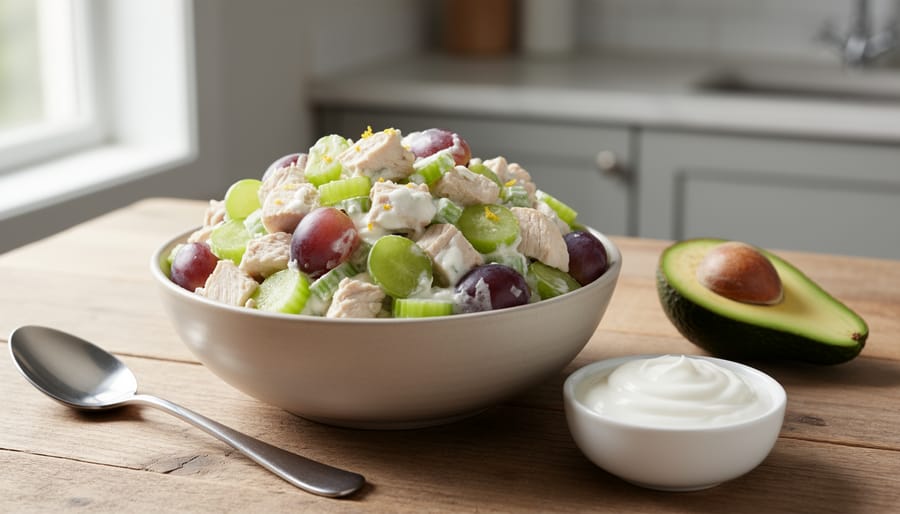
You can make delicious chicken salad without mayo using Greek yogurt, mashed avocado, or hummus as your creamy base. Each alternative delivers the rich, satisfying texture you want while cutting calories, boosting protein, or accommodating dairy-free needs. The best part? Your chicken salad will taste fresher and lighter than the traditional version, with none of that heavy, overly-rich feeling.
If you’re looking to fuel your body better in 2026, ditching mayo is one of the easiest swaps you can make. Traditional mayonnaise packs around 90 calories per tablespoon with minimal nutrition, while Greek yogurt brings the same creaminess plus 15 grams of protein per cup. Avocado adds heart-healthy fats that keep you satisfied longer. Whether you’re prepping post-workout meals or packing lunches for the week, a mayo-free chicken salad gives you clean energy without the sluggish afternoon crash.
This recipe takes just 15 minutes from start to finish, requires no cooking if you use rotisserie chicken, and keeps perfectly in the fridge for up to four days. You’ll get all the classic chicken salad flavors you crave, with crunch from celery and grapes, brightness from lemon juice, and that creamy coating that makes every bite satisfying. The simple substitution opens up new flavor possibilities too, from tangy tzatziki-style versions to zesty cilantro-lime variations that work beautifully in wraps, on salads, or straight from the bowl.
Why Skip the Mayo? Health and Taste Benefits
Traditional mayo-based chicken salad can pack a surprising caloric punch, often deriving most of its calories from fat rather than protein. Swapping mayo for lighter alternatives transforms this classic dish into a genuinely nutritious option that supports your wellness goals without sacrificing satisfaction. Whether you’re preparing high-protein meals for the week or simply looking for a fresher taste, ditching the mayo opens up exciting possibilities.
The benefits go beyond just cutting calories. Here’s what you gain by going mayo-free:
- Dramatic calorie reduction, standard mayonnaise calorie content runs about 90 calories per tablespoon, mostly from fat
- Improved protein-to-fat ratio that better supports muscle maintenance and recovery
- Allergen-friendly options for those with egg sensitivities or following specific dietary protocols
- Brighter, cleaner flavors that let the chicken and fresh vegetables shine through
- Easier digestion for people who find heavy, oil-based dressings uncomfortable
Beyond the nutritional wins, many people genuinely prefer the lighter, more vibrant taste of mayo-free versions. Greek yogurt brings tang, avocado adds richness, and hummus contributes savory depth, each alternative creates a distinct flavor profile that feels more intentional than coating everything in neutral mayo. You’re not giving something up; you’re discovering what chicken salad can really taste like when fresh ingredients take center stage.
What You’ll Need: Ingredients and Kitchen Tools
Essential Ingredients
Start with about 2 cups of cooked, shredded chicken breast or rotisserie chicken for a standard four-serving batch. You’ll need a creamy base to replace mayo: Greek yogurt, mashed avocado, hummus, cottage cheese, or tahini all work beautifully depending on your taste preference.
For crunch and freshness, grab celery (two stalks, diced), red onion (a quarter cup, finely chopped), and optionally some crisp apple or grapes for sweetness. Season with salt, black pepper, garlic powder, and a squeeze of lemon juice to brighten the flavors. Fresh dill or parsley adds an herbal lift that complements the creamy base without overpowering the chicken.
These simple ingredients create a satisfying, protein-rich salad that tastes indulgent without the heavy mayonnaise.
Kitchen Equipment
You don’t need fancy kitchen gadgets to make excellent mayo-free chicken salad. A medium mixing bowl gives you enough room to combine ingredients without spilling. Use a fork to shred tender chicken or a potato masher if you prefer a chunkier texture. A sharp knife and sturdy cutting board handle all your chopping tasks, from vegetables to herbs. Keep measuring cups handy for portioning your binder alternatives accurately, this ensures consistent results every time. These basic tools, likely already in your kitchen, are all you need to create a fresh, healthy chicken salad in minutes.
Optional Flavor Boosters
Once you’ve mastered the basic recipe, you can personalize your chicken salad with these optional add-ins:
Crunch enhancers: Toasted almonds, walnuts, pecans, or sunflower seeds add texture and healthy fats. Diced celery or water chestnuts work too.
Sweet elements: Dried cranberries, halved grapes, diced apples, or pomegranate seeds balance savory flavors with natural sweetness.
Fresh herbs: Chopped dill, basil, cilantro, or parsley brighten the taste profile significantly.
Protein boosters: Chickpeas, hard-boiled eggs, or crumbled feta cheese increase satiety and nutritional value without adding mayo.
Important Tips Before You Start
Before you dive into mixing, a few simple precautions will ensure your chicken salad is both delicious and safe to eat. Proper handling makes all the difference in preventing foodborne illness and achieving the best texture and flavor.
Start with fully cooled chicken, mixing warm chicken with your binder creates a watery, separated mess that won’t hold together properly. If you’re using store-bought rotisserie chicken, remove the skin and any visible fat before shredding or dicing. This keeps the salad lighter and prevents greasy pockets.
Check your chosen binder for allergens if you’re serving guests. Greek yogurt contains dairy, tahini comes from sesame seeds, and some avocados can trigger reactions in people with latex sensitivities. When substituting, maintain similar consistency, thin yogurt won’t bind as well as thick, strained varieties.
The most common mistake is over-mixing, which turns chicken into paste and makes vegetables mushy. Fold ingredients together gently just until combined. Under-seasoning is another pitfall, mayo-free versions need slightly more salt and acid to compensate for mayo’s rich, tangy profile. Taste as you go and adjust before chilling, since cold temperatures dull flavors.
Finally, commit to food-safe meal prep practices throughout: wash hands frequently, keep ingredients chilled until you’re ready to assemble, and store your finished salad in an airtight container at 40°F (4°C) or below. These habits protect your health while preserving the fresh, vibrant taste that makes mayo-free chicken salad so appealing.
5 Creamy Mayo Alternatives That Actually Work
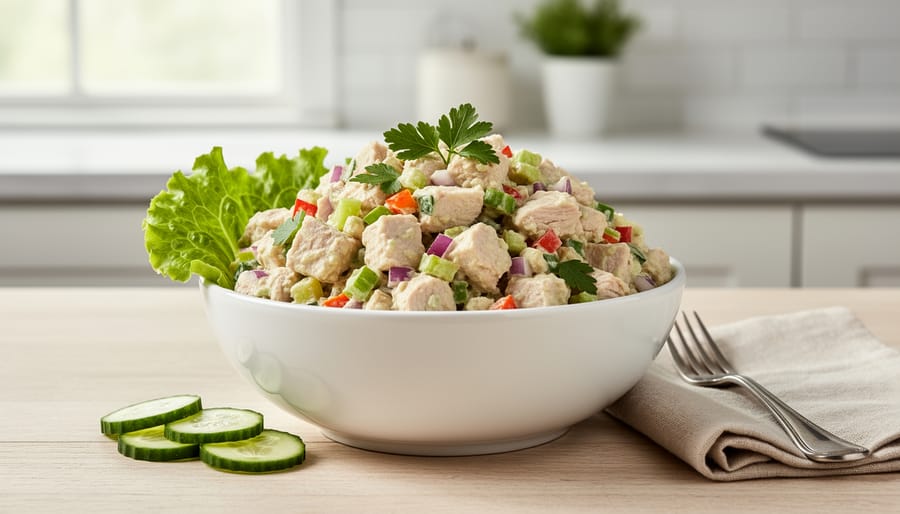
The secret to mayo-free chicken salad is choosing a binder that delivers both creaminess and flavor without the heavy calories or allergens. Here are five alternatives that actually work, each with distinct advantages to match your goals.
Greek Yogurt is the closest match to traditional mayo’s texture. It brings 15-20 grams of protein per cup compared to mayo’s 2 grams, cuts calories by nearly 75%, and adds beneficial probiotics for gut health. Plain, full-fat Greek yogurt creates the richest consistency, while 2% works if you want to trim more calories. The mild tang brightens the overall flavor without overpowering the chicken.
Mashed Avocado delivers heart-healthy monounsaturated fats and a silky texture that coats every bite. One medium avocado provides about 230 calories but packs fiber, potassium, and vitamins E and K. The subtle, buttery flavor pairs beautifully with lime juice and cilantro for a southwestern twist. Use avocado within 24 hours since it oxidizes quickly.
Hummus transforms chicken salad into a Mediterranean-inspired dish with plant-based protein and a nutty depth. Standard chickpea hummus adds around 25-30 calories per tablespoon, far less than mayo’s 90-100 calories, while contributing fiber that keeps you satisfied longer. The tahini base provides healthy fats and a creamy consistency that binds ingredients beautifully.
Cottage Cheese might surprise you as the protein champion, delivering about 25 grams per cup with only 180-220 calories depending on fat content. Blend it smooth for 30 seconds if you prefer a uniform texture, or leave it slightly chunky for added interest. Small curd varieties integrate more seamlessly than large curd. The mild flavor lets your seasonings and add-ins shine.
Sour Cream splits the difference between indulgence and health, cutting mayo’s calories roughly in half while maintaining that rich, tangy profile many people crave. It creates an ultra-smooth consistency and pairs especially well with dill, garlic, and onion powder for a classic flavor profile. Light sour cream works fine and saves another 30-40 calories per serving without sacrificing much texture.
Step-by-Step: Making Your Mayo-Free Chicken Salad
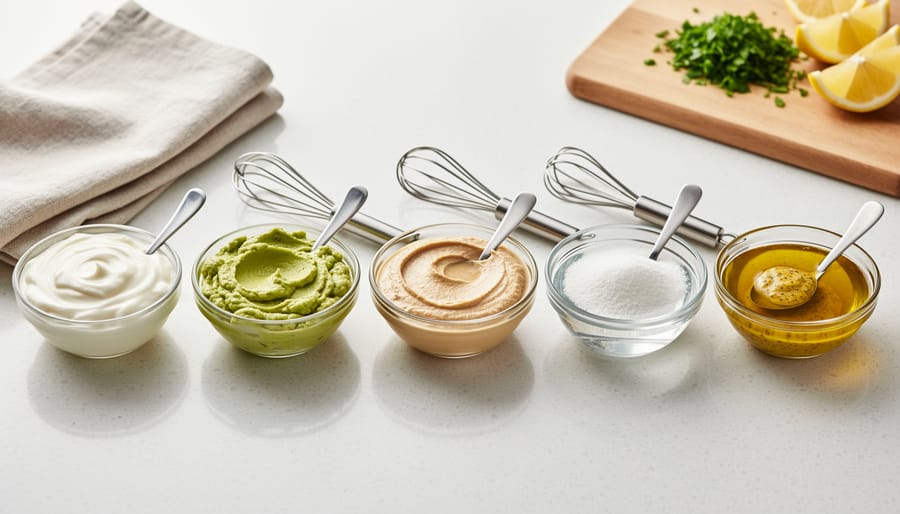
Step 1: Prepare Your Chicken
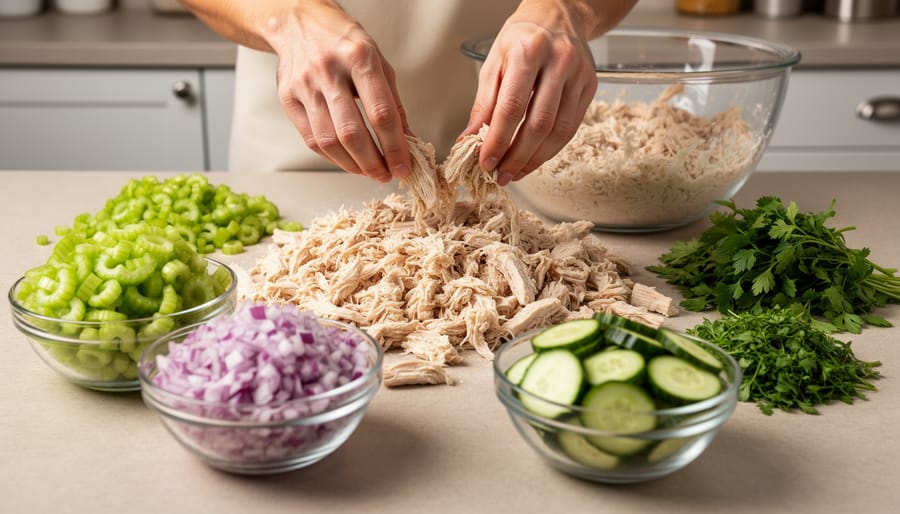
Start with boneless, skinless chicken breasts or thighs, breasts give you a leaner texture, while thighs stay moister and add richer flavor. Poach them gently in simmering water with a pinch of salt for 12-15 minutes until they reach 165°F internally, or use leftover rotisserie chicken to save time.
Let the chicken cool completely before handling; warm chicken will make your salad soggy and affect food safety. Once cooled, shred it with two forks for a fluffy, stringy texture that holds dressing well, or dice it into half-inch cubes for a chunkier, more substantial bite. Pat away any excess moisture with paper towels before moving to the next step.
Step 2: Choose and Prepare Your Binder
Pick one binder from the five alternatives based on your flavor goals. For Greek yogurt or sour cream, simply measure and add directly, they’re ready to use. Avocado needs mashing with a fork until smooth and creamy, adding a squeeze of lemon juice to prevent browning. Hummus should be thinned slightly with a teaspoon of water or olive oil if it’s too thick, stirring until it reaches a spreadable consistency. For cottage cheese, blend it smooth in a food processor for about 30 seconds, or mash thoroughly with a fork if you prefer some texture. Aim for a consistency that coats a spoon but still flows easily.
Step 3: Mix Your Base Ingredients
Start by placing your shredded chicken in a large mixing bowl. Add your chosen binder, whether it’s Greek yogurt, mashed avocado, or another alternative, and use a fork to gently fold everything together. The key is not overmixing; you want the chicken pieces coated but still distinct, not turned into a paste.
Next, add your diced celery, onions, and any core vegetables you’re using. Fold them in with broad strokes, ensuring even distribution without crushing the ingredients. The vegetables should maintain their crunch, providing textural contrast to the creamy binder and tender chicken pieces.
Step 4: Season and Adjust
Now comes the fun part, tasting and tweaking until your chicken salad sings. Start with salt and freshly cracked black pepper, adding a pinch at a time. A squeeze of fresh lemon juice or a splash of apple cider vinegar brightens the whole mix and cuts through richness. Try garlic powder, smoked paprika, or dried dill for depth without overpowering the fresh ingredients.
Taste after each addition. Does it need more tang? Add another squeeze of citrus. Too bland? A bit more salt works wonders. If it tastes flat, a teaspoon of Dijon mustard or a dash of hot sauce creates complexity. The chicken should taste vibrant, not one-dimensional. Trust your palate and adjust until every bite feels balanced and satisfying.
Step 5: Chill and Serve
Once everything is mixed, cover your bowl and refrigerate for at least 30 minutes before serving. This chilling period is crucial, it lets the flavors meld together and allows your binder to fully coat the chicken and vegetables. The salad will taste noticeably better after resting than it does fresh from the bowl.
For best results, chill for one to two hours if you have time. The texture firms up slightly, making it easier to scoop onto bread or lettuce. Serve cold straight from the fridge, or let it sit at room temperature for five minutes if you prefer a less chilly bite.
How to Tell When Your Chicken Salad Is Perfect
Your chicken salad is ready when it meets a few simple quality standards. Here’s how to verify you’ve nailed the recipe:
- Every chicken piece is evenly coated with your chosen binder, with no dry pockets or pooling liquid at the bottom of the bowl
- The mixture holds together when scooped but isn’t gummy or overly wet; it should mound on a spoon without running off
- You can taste the seasoning throughout, not just on the surface; the flavors feel balanced rather than one-note
- The salad is properly chilled (around 40°F or below) and refreshingly cold to the touch
Give your salad a final taste test after chilling. The flavors should be brighter and more developed than when freshly mixed. If something tastes flat, a pinch of salt or squeeze of lemon juice usually fixes it. The texture should be similar to traditional chicken salad but lighter and less heavy. When you add this to your rotation of healthy lunch ideas maintaining routine and consistency with meal prep becomes much easier. If your salad passes these checks, you’re ready to enjoy a delicious, mayo-free creation that’s both satisfying and nutritious.
Serving Ideas and Storage Tips
Your mayo-free chicken salad is incredibly versatile. Pile it onto whole-grain bread or a croissant for a classic sandwich, or wrap it in a large tortilla with extra greens for a portable lunch. For a low-carb option, scoop the salad into crisp lettuce cups, butter lettuce and romaine work beautifully, or serve it over mixed greens as a protein-packed salad bowl. You can also stuff it into halved avocados, hollow tomatoes, or bell peppers for an eye-catching presentation that adds nutrients and fiber.
If you’re meal prepping, store the chicken salad in an airtight container in the refrigerator where it’ll stay fresh for three to four days. Greek yogurt and hummus-based versions hold up particularly well, while avocado-based salads are best eaten within two days before oxidation affects color and flavor. Keep any crunchy add-ins like nuts or crispy vegetables separate until serving to maintain their texture.
For grab-and-go convenience, portion individual servings into small containers alongside crackers, carrot sticks, or cucumber slices. This approach saves time during busy mornings and helps with portion control. Avoid freezing chicken salad, as the texture breaks down when thawed, leaving you with watery, separated ingredients. With proper storage, you’ll have healthy, satisfying meals ready whenever hunger strikes.
Frequently Asked Questions
How long does mayo-free chicken salad last in the fridge?
Most mayo-free chicken salads stay fresh for 3 to 4 days when stored in an airtight container in the refrigerator. Greek yogurt and avocado-based versions should be consumed within 2 to 3 days for best quality, while hummus and tahini-based options can last the full 4 days. Always check for off smells or discoloration before eating, and keep your salad refrigerated at 40°F or below.
Can I freeze chicken salad without mayo?
Freezing isn’t recommended for most mayo-free chicken salads because the vegetables become watery and lose their crunch, and dairy-based or avocado binders separate when thawed. If you must freeze it, use only the chicken mixed with hummus or tahini, freeze for up to one month, and plan to add fresh vegetables and adjust seasoning after thawing.
What should I do if my chicken salad turns out too dry?
Add more of your chosen binder one tablespoon at a time until you reach the desired creaminess. A splash of lemon juice, lime juice, or even a teaspoon of olive oil can help loosen the mixture without overpowering the flavor. Letting the salad rest in the fridge for 30 minutes also allows flavors to meld and the chicken to absorb moisture from the binder.
Which type of chicken works best for mayo-free recipes?
Rotisserie chicken offers the most convenience and flavor, while poached or baked chicken breast provides leaner protein with a mild taste that lets your binder and seasonings shine. Thighs add richness and stay moist even when mixed with lighter binders like Greek yogurt. Avoid using chicken that’s overly dry or tough, as mayo-free versions rely more on the chicken’s natural moisture.
Can I make this recipe completely dairy-free or vegan?
Absolutely. Use hummus, tahini, mashed avocado, or blended silken tofu as your binder instead of Greek yogurt. For a vegan version, replace the chicken with chickpeas, white beans, or shredded jackfruit, and you’ll still get a protein-rich, creamy salad. These plant-based options work perfectly with the same vegetables, herbs, and seasonings in the original recipe.
How long does mayo-free chicken salad last in the fridge?
Most versions stay fresh for 3 to 4 days in an airtight container. Greek yogurt and avocado-based salads are best within 2 to 3 days, while hummus and tahini options can last the full 4 days.
Can I freeze chicken salad without mayo?
Freezing isn’t ideal because vegetables become watery and binders can separate when thawed. If needed, freeze only the chicken with hummus or tahini for up to one month, then add fresh vegetables after thawing.
What if my chicken salad is too dry?
Add more binder one tablespoon at a time, or mix in a splash of lemon juice or olive oil. Let it rest in the fridge for 30 minutes so the chicken absorbs moisture.
What’s the best chicken to use?
Rotisserie chicken offers convenience and flavor, poached or baked breast provides lean protein, and thighs add richness. Avoid overly dry chicken since mayo-free versions rely on the meat’s natural moisture.
These questions cover the most common concerns when making chicken salad without mayo. Once you’ve mastered the basics and understand how different binders behave, you’ll feel confident adjusting recipes to match your preferences and dietary needs.
You’ve just discovered that skipping mayo doesn’t mean sacrificing flavor or creaminess. Whether you choose Greek yogurt for extra protein, avocado for healthy fats, or hummus for a Mediterranean twist, you’re making a choice that supports your wellness goals without compromise.
The beauty of mayo-free chicken salad lies in its flexibility. Start with one of the five alternatives we’ve covered, then make it your own. Add cranberries for sweetness, toss in some walnuts for crunch, or keep it simple with classic celery and herbs. Each batch is an opportunity to experiment and find your perfect combination.
This recipe fits seamlessly into meal prep routines, lunchboxes, and quick weeknight dinners. You’re not just making chicken salad; you’re building a lighter, fresher habit that your body will thank you for. Go ahead and try it today, your taste buds and your health are both in for a treat.
