
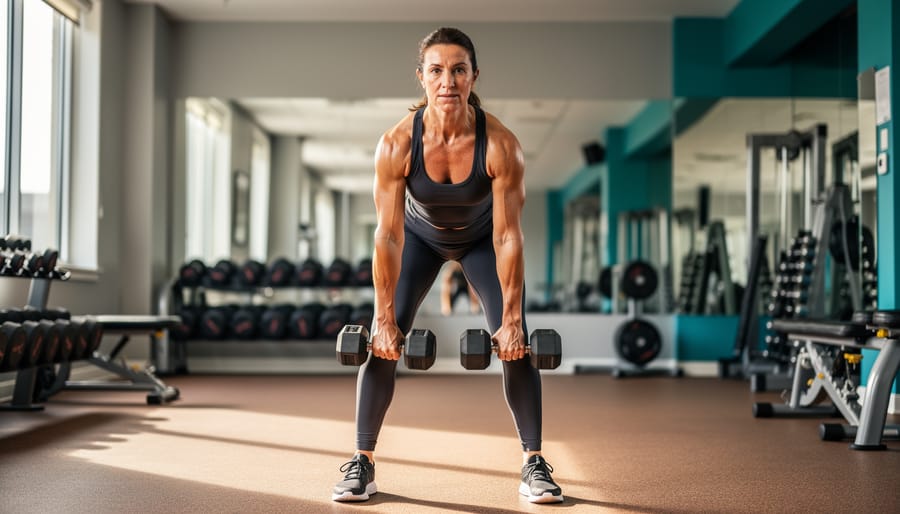
The right workout routine after 40 isn’t about doing less, it’s about training smarter to build strength, protect your joints, and work with your body’s natural changes. Women over 40 face real physiological shifts like declining estrogen levels, gradual muscle loss (about 3-8% per decade), and changes in how the body stores fat and recovers from exercise. But here’s the good news: targeted exercise can absolutely reverse many of these trends while boosting energy, metabolism, and bone density.
Your ideal fitness plan should balance strength training to preserve lean muscle, cardiovascular work that protects your heart without overtaxing joints, and mobility exercises that keep you moving freely. The key is choosing workout styles that deliver maximum benefit while respecting recovery needs and any physical limitations you might have developed.
This guide breaks down eight proven workout types specifically effective for women in this life stage. You’ll discover why resistance training becomes non-negotiable after 40, which cardio methods offer the best return without excessive impact, and how to structure a weekly routine that fits into your real life. Each workout type includes clear benefits, practical tips for getting started, and honest guidance about what to expect.
Whether you’re returning to fitness after years away or looking to refresh your current routine, these recommendations will help you build a sustainable program that makes you stronger, more energetic, and confident in your body’s capabilities for decades to come.
Why Your Workout Needs Change After 40
Your body at 40 isn’t the same as it was at 25, and that’s not a limitation, it’s information you can use to train smarter. Understanding what’s shifting physiologically helps you choose workouts that work with your body, not against it.
After 40, estrogen levels begin to decline, especially as you approach perimenopause and menopause. This hormonal shift affects how your body stores fat, builds muscle, and recovers from exercise. You might notice fat accumulating around your midsection more easily, or that you feel sore longer after the same workout that used to leave you fine the next day.
Muscle mass naturally decreases by about 3-8% per decade after 30, a process called sarcopenia. This matters because muscle burns more calories at rest than fat does, which is partly why metabolism slows. You’re not imagining it, your body genuinely requires fewer calories to maintain the same weight, and losing weight becomes more challenging without intentional muscle-building exercise.
Bone density also declines with age, particularly after menopause when estrogen’s protective effect diminishes. This increases fracture risk and makes weight-bearing, bone-strengthening exercise essential rather than optional.
Recovery takes longer too. Tendons, ligaments, and joints need more time to repair, which means rest days aren’t laziness, they’re when your body actually gets stronger. The eight routines that follow address these specific changes head-on, giving you practical ways to build strength, protect your bones, support your metabolism, and feel energized rather than exhausted.
What Makes These Routines Right for You
These eight routines weren’t picked at random. Each one addresses specific challenges you face after 40, from hormonal shifts to recovery needs that weren’t on your radar in your twenties.
Strength preservation tops the list because you naturally lose 3-8% of muscle mass per decade after 30. The routines here counter that loss with proven resistance work. Joint-friendly movements matter equally, your knees, hips, and shoulders need exercises that build strength without grinding down cartilage.
Metabolic support is built in. As your metabolism slows, these workouts boost calorie burn both during and after exercise. Flexibility and balance get serious attention because stiff joints and unstable footing increase injury risk as you age.
Sustainability is the filter every routine passed. You won’t find extreme programs that work for two weeks then leave you burned out. These are approaches you can maintain for years, adapting intensity as your fitness improves.
Finally, injury prevention shapes every recommendation. At this stage, a torn rotator cuff or stress fracture derails progress for months. Smart exercise selection keeps you moving forward consistently rather than sitting on the sidelines.
1. Strength Training with Moderate Weights
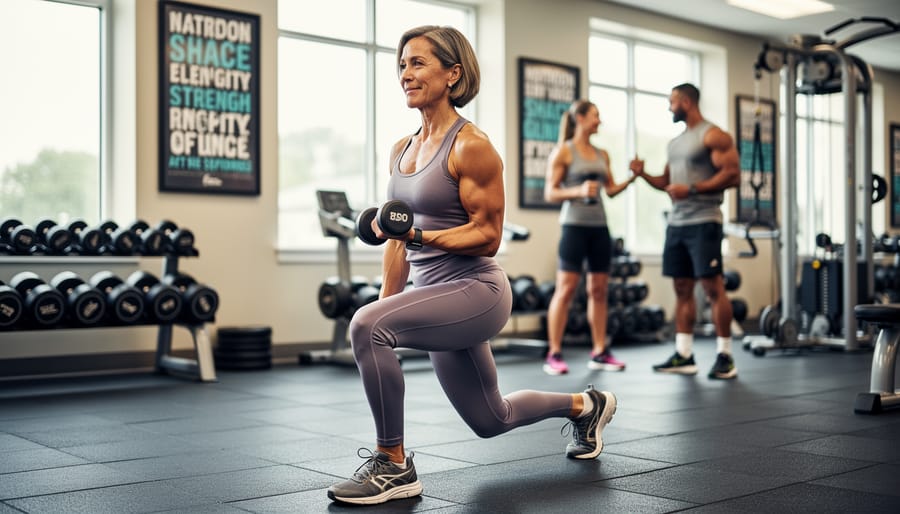
Strength training with moderate weights is the cornerstone of fitness for women over 40 because it directly counters the natural muscle loss that accelerates during this decade. After 40, women lose approximately 3-8% of muscle mass per decade, and resistance training is the most effective way to slow or reverse this decline. Beyond preserving muscle, lifting weights strengthens bones by stimulating osteoblast activity, the cells responsible for building bone tissue, making it one of the best defenses against osteoporosis.
Moderate weights mean using loads that challenge you without compromising form. You’re aiming for 8-12 repetitions per set where the last two reps feel difficult but controlled. This rep range builds both strength and endurance while protecting joints from the excessive stress that comes with maxing out heavy weights. Focus on compound movements, exercises that work multiple muscle groups simultaneously, because they’re efficient, functional, and trigger a stronger metabolic response than isolation exercises.
Start with these foundational compound exercises:
- Goblet squats: Hold a dumbbell at chest height, feet shoulder-width apart, and squat until thighs are parallel to the floor
- Dumbbell rows: Hinge at the hips with one hand on a bench, pull weight to ribcage while keeping elbow close to body
- Chest presses: Lie on a bench or floor, press dumbbells upward from chest level until arms are nearly straight
- Romanian deadlifts: Hold weights in front of thighs, hinge at hips with slight knee bend, lower weights along shins until you feel hamstring stretch
- Overhead presses: Press dumbbells from shoulder height to overhead, keeping core engaged and avoiding excessive back arch
Aim for two to three strength sessions per week with at least one rest day between sessions to allow proper recovery. Progress safely by increasing weight only when you can complete all sets with good form, adding just 5-10% at a time. The metabolic benefits extend well beyond your workout, muscle tissue burns more calories at rest than fat tissue, so building strength actually elevates your baseline metabolism throughout the day.
2. Low-Impact Cardio for Heart Health
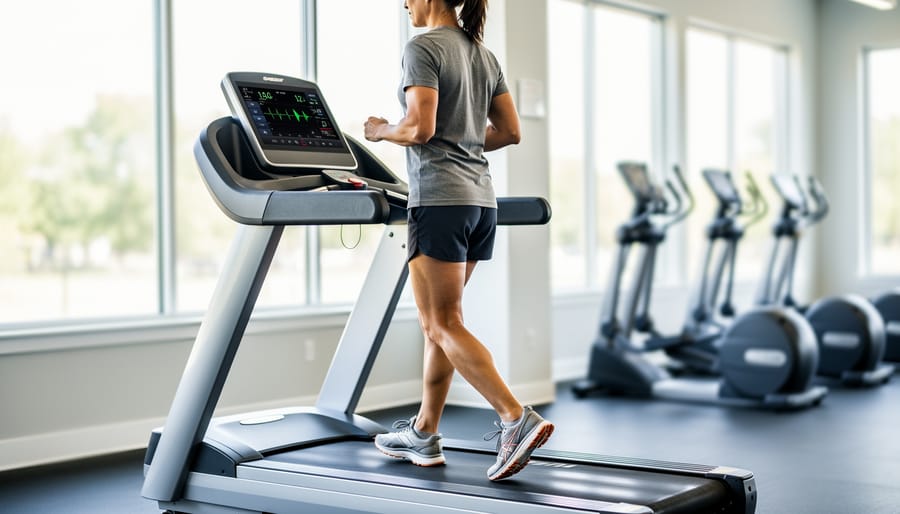
Low-impact cardio protects your joints while delivering all the cardiovascular benefits your body needs after 40. Walking, cycling, swimming, and elliptical training raise your heart rate without the pounding stress that running or jumping places on knees, hips, and ankles.
Your heart doesn’t distinguish between high-impact and low-impact movement. What matters is sustaining an elevated heart rate in your target zone, typically 50-70% of your maximum for moderate intensity. A brisk 30-minute walk or a steady swim session strengthens your cardiovascular system, improves circulation, and supports healthy blood pressure just as effectively as higher-impact alternatives.
These activities also promote fat loss when performed consistently. Aim for 150 minutes of moderate-intensity cardio weekly, spread across 4-5 sessions. A 30-minute walk five mornings per week hits this target easily. For greater fat-burning benefits, extend some sessions to 45-60 minutes or add gentle intervals, alternating between your normal pace and a slightly faster push for 1-2 minutes.
Swimming deserves special mention for women over 40. The water supports your body weight, eliminating joint stress entirely while providing natural resistance that tones muscles as you move. It’s ideal if you’re managing arthritis, recovering from injury, or simply prefer a full-body workout that feels refreshing rather than draining.
The key is consistency over intensity. Three 40-minute cycling sessions will transform your fitness more than sporadic, exhausting efforts that leave you too sore to exercise again for days.
3. Yoga for Flexibility and Stress Management
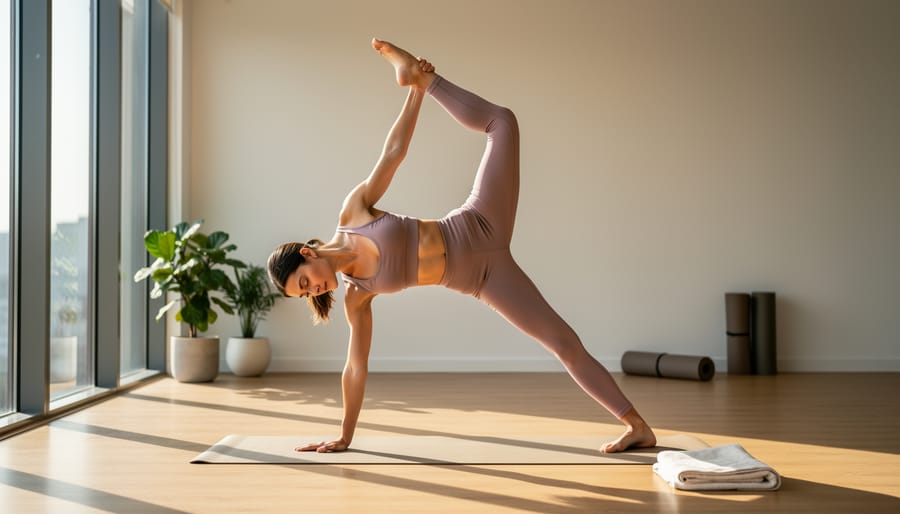
Yoga delivers a powerful combination of physical and mental benefits that become particularly valuable after 40. The practice addresses flexibility loss that accelerates with age while simultaneously managing cortisol, the stress hormone that tends to remain elevated longer in women over 40. This dual action makes yoga uniquely suited to your body’s changing needs.
Regular yoga practice improves joint mobility without the impact stress of other activities. As you hold poses and move through sequences, you gently increase your range of motion in the hips, shoulders, and spine, areas where stiffness often settles. The controlled movements also strengthen the muscles surrounding your joints, providing better support and stability.
For stress management, yoga combines breathwork with movement to activate your parasympathetic nervous system. This counteracts the chronic stress response that can interfere with sleep, metabolism, and recovery after 40. Studies show that consistent yoga practice lowers cortisol levels and improves overall mood regulation.
Start with Hatha yoga for foundational poses and steady pacing. Yin yoga offers deep stretching through longer-held poses that target connective tissue. Restorative yoga uses props to support complete relaxation, making it ideal for recovery days. Practice 2-3 times weekly, either through classes or following online sessions. Even 20 minutes provides measurable benefits. You’ll notice improved balance, reduced muscle tension, and better sleep quality, all of which support your other workouts and daily activities.
4. Pilates for Core Strength and Posture
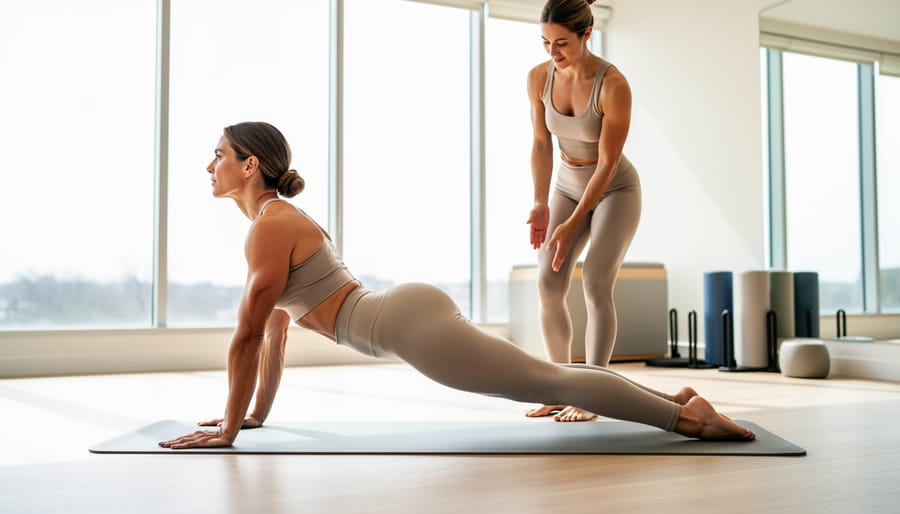
Pilates targets the deep stabilizing muscles of your core, the transverse abdominis, pelvic floor, and multifidus, that often weaken with age and inactivity. Unlike traditional ab exercises that focus on the superficial six-pack muscles, Pilates builds strength from the inside out, creating a stable foundation that protects your spine and improves how you move through daily life.
Strong core muscles directly translate to better posture, which becomes increasingly important as we age. That stability helps you stand taller, reduces lower back pain, and makes activities like carrying groceries, gardening, or playing with grandchildren feel easier and safer. The controlled, precise movements also enhance body awareness, helping you recognize and correct postural habits before they cause problems.
You can practice Pilates on a mat using just your body weight, or on a reformer machine that adds spring resistance for varied challenge levels. Mat Pilates offers convenience and zero equipment costs, while reformer sessions provide more support for beginners and additional resistance options as you progress. Both formats deliver excellent results when practiced consistently.
Aim for two to three Pilates sessions per week, either as standalone workouts or paired with strength training days. A typical session runs 30 to 50 minutes and focuses on breath control, alignment, and flowing movement sequences. The low-impact nature means you can practice Pilates frequently without overtaxing your joints, making it an ideal complement to higher-intensity workouts in your weekly rotation.
5. High-Intensity Interval Training (Modified HIIT)
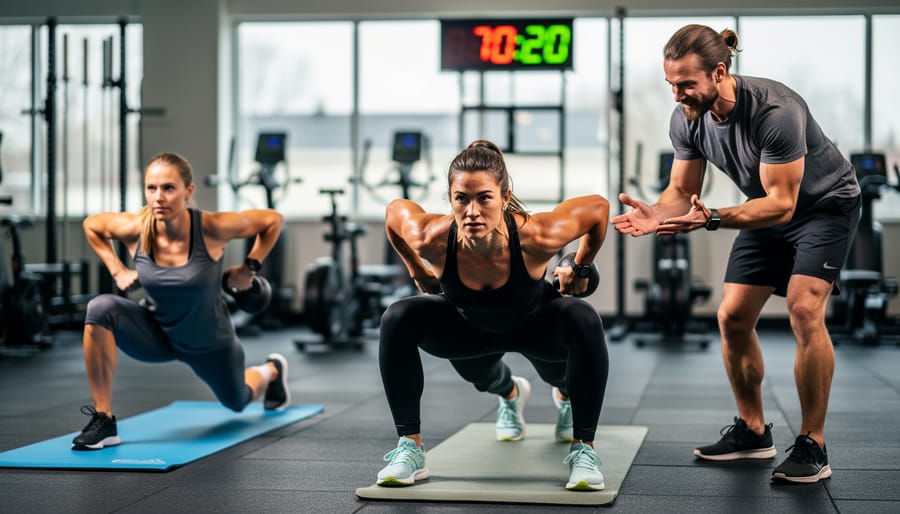
High-intensity interval training doesn’t mean punishing your body. After 40, modified HIIT becomes one of the smartest cardio options because it delivers maximum metabolic benefits in minimal time while respecting your body’s need for adequate recovery. The format is simple: alternate short bursts of elevated effort (20-40 seconds) with equal or longer rest periods (30-60 seconds). This approach triggers the afterburn effect, where your metabolism stays elevated for hours post-workout, which is particularly valuable as natural metabolic rate declines with age.
The key word here is “modified.” Instead of jumping or explosive movements that stress joints, opt for exercises like fast-paced walking intervals, cycling sprints, kettlebell swings, or bodyweight exercises performed at your personal high intensity. Your “sprint” might be someone else’s moderate pace, and that’s perfectly fine. What matters is reaching 7 or 8 out of 10 on your perceived exertion scale during work intervals, then allowing your heart rate to recover during rest periods.
Aim for 1-2 HIIT sessions weekly, lasting 15-25 minutes including warm-up and cool-down. This limited frequency prevents overtraining while still delivering cardiovascular improvements and fat-burning benefits. On recovery days, stick with gentler activities like walking, yoga, or swimming. Your cardiovascular system gets stronger during rest, not during the workout itself, so treating recovery as part of the training process rather than optional downtime makes HIIT sustainable and effective long-term.
6. Balance and Stability Training
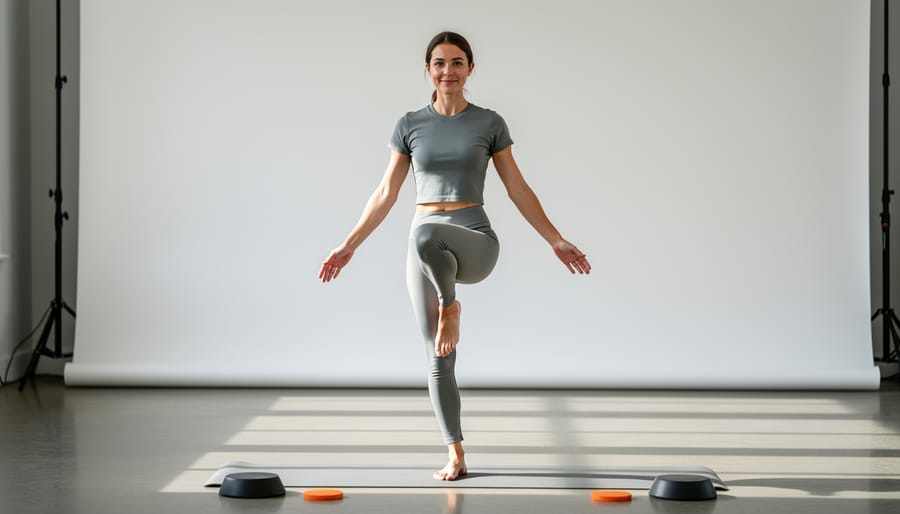
After 40, your balance system naturally begins to decline, inner ear function changes, proprioception (your body’s sense of position) weakens, and muscle reactions slow. Falls become more consequential, both physically and psychologically. Balance training isn’t about accommodating decline; it’s about actively maintaining the coordination and confidence that let you move freely through life.
Single-leg exercises form the foundation. Try single-leg deadlifts, standing knee raises, or simply balancing on one foot while brushing your teeth. These movements force your stabilizing muscles, particularly around your ankles, knees, and hips, to engage and strengthen. Start by holding a wall or chair for support, then progress to unsupported holds.
Stability ball work adds an unstable surface that challenges your core and smaller stabilizing muscles. Sitting on the ball while lifting one foot, performing bridges with your feet on the ball, or doing planks with your forearms on the ball all create controlled instability that translates to better real-world balance.
Include balance-focused movements twice weekly, either as a warm-up for other workouts or as dedicated 10-minute sessions. The payoff extends beyond fall prevention: you’ll notice improved athletic performance, better posture, and the quiet confidence that comes from trusting your body’s ability to stabilize itself in any situation.
7. Resistance Band Workouts
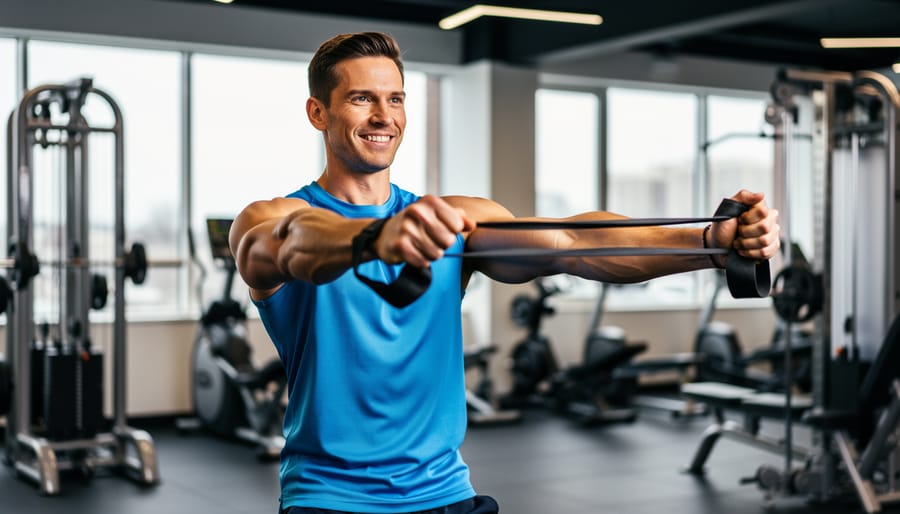
Resistance bands deliver serious strength gains without the joint stress that can accompany heavy weights. These simple tools create constant tension throughout each movement, which means your muscles work harder through the entire range of motion rather than just at specific points like with dumbbells or barbells.
The beauty of bands lies in their adaptability. You can adjust resistance by choosing thicker bands, doubling them up, or simply stepping farther from the anchor point. This progressive approach lets you build strength gradually while maintaining perfect form, which matters more at 40+ when injury prevention takes priority.
Bands also win on convenience. They fit in your purse, travel bag, or desk drawer, eliminating the “I don’t have access to a gym” excuse. You can train your entire body with a set that costs less than a month’s gym membership.
For full-body coverage, try banded squats (step on the band, hold handles at shoulders), chest presses (anchor behind you, press forward), rows (anchor in front, pull toward ribs), and lateral raises (step on band, lift arms to sides). Target 12-15 reps per exercise, focusing on controlled movement rather than speed.
Mix bands into your strength training days or use them alone when you need a lighter session. They’re particularly effective on recovery days or when traveling, ensuring you maintain momentum without overtaxing your body.
8. Functional Fitness Training
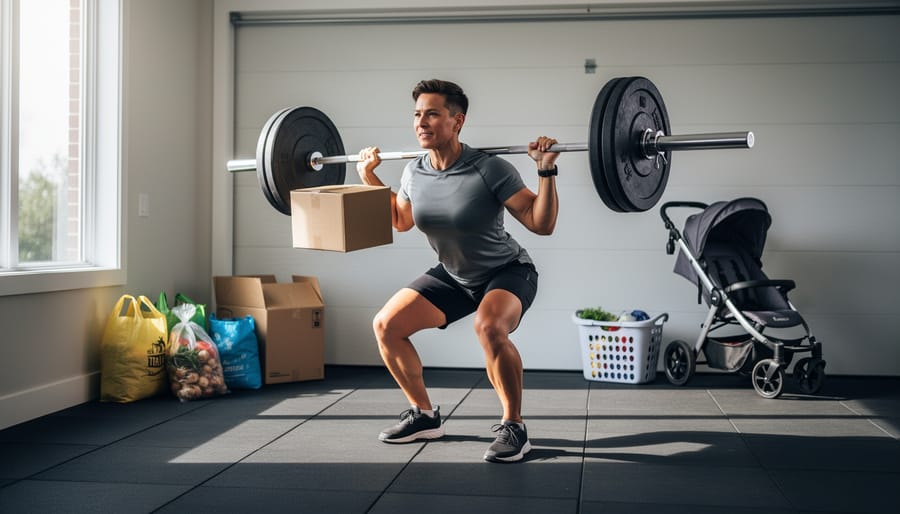
Functional fitness training prepares your body for real life, not just the gym. These exercises mirror movements you do every day, picking up groceries, climbing stairs, reaching overhead, getting up from the floor, and make them easier and safer.
Unlike isolated exercises that target single muscles, functional movements engage multiple muscle groups working together. A squat-to-overhead press mimics placing a box on a high shelf. A rotational wood chop pattern replicates reaching across your body to grab something. Farmer’s carries simulate carrying shopping bags or luggage. These compound movements build practical strength that translates directly to confidence in daily tasks.
The injury prevention benefit becomes critical after 40. When you regularly practice safe lifting mechanics and controlled rotation during workouts, your body instinctively uses proper form when you bend to tie your shoe or twist to back out of a parking space. This neuromuscular training reduces the risk of those sudden tweaks and pulls that can sideline you.
Functional training also maintains the independence so many women over 40 prioritize. Keeping the ability to carry your own suitcase, play on the floor with grandchildren, or rearrange furniture without help preserves both physical capability and mental confidence.
Incorporate functional exercises 2-3 times weekly, either as standalone sessions or integrated into your strength training. These movements complement every other workout type on this list, serving as the practical foundation that makes fitness meaningful beyond performance metrics.
Building Your Personalized Weekly Schedule
Creating your own weekly schedule doesn’t mean doing all eight routines every week. Instead, pick three to four that address your priorities and energy levels.
If you’re newer to exercise or time-pressed, start with three sessions weekly: two strength training days (moderate weights or resistance bands) and one flexibility day (yoga or Pilates). Add a 20-minute walk on off days if you feel energized.
For intermediate fitness levels with four to five weekly sessions, try: Monday strength training, Tuesday low-impact cardio, Wednesday yoga, Thursday strength training with different muscle groups, Friday modified HIIT or Pilates, plus weekend balance work or a longer walk.
More experienced? Consider five to six varied workouts: alternate strength and cardio days, add one HIIT session, and weave in yoga or Pilates twice weekly. Include at least one full rest day, recovery matters more after 40 than cramming in extra sessions.
The real key is flexibility. Had a rough night’s sleep? Swap your planned HIIT for gentle yoga. Feeling strong? Add ten minutes of balance training after your walk. Your schedule should serve your energy and goals, not dictate them. Track how you feel after different combinations and adjust accordingly. Some weeks you’ll do more, others less. Consistency over months beats perfection in any single week.
Common Questions About Working Out After 40
How often should I work out each week?
Aim for 4-5 days of activity that includes a mix of strength training (2-3 sessions), cardio, and flexibility work. Build in at least two rest days for recovery, which becomes more important as your body needs additional time to repair and adapt to exercise stress.
Should I see a doctor before starting a new routine?
If you haven’t exercised regularly in several years, have existing health conditions, or experience unusual symptoms like chest pain or dizziness, schedule a checkup first. For most women beginning moderate exercise, a gradual start with attention to how your body responds is sufficient.
Can I still build muscle after 40?
Absolutely. While muscle growth happens more gradually than in your twenties, consistent strength training with progressive overload still builds lean mass effectively. Focus on protein intake, adequate rest, and patience with the process.
How do I know if I’m overdoing it?
Warning signs include persistent fatigue, trouble sleeping, prolonged muscle soreness beyond 72 hours, increased irritability, or decreased performance. Scale back intensity or add extra rest days if you notice these symptoms.
What if I’m completely new to exercise?
Start with two or three weekly sessions of low-impact cardio like walking, paired with bodyweight or light resistance exercises. Master basic movement patterns before adding complexity or intensity, and celebrate small wins rather than comparing yourself to others.
Your nutrition does need some adjustment to support exercise recovery. Prioritize protein at each meal to preserve muscle mass, stay hydrated throughout the day, and don’t slash calories drastically, which can backfire by slowing metabolism and leaving you too depleted to sustain workouts. Think of food as fuel that enables the active lifestyle you’re building.
Your forties and beyond aren’t about slowing down, they’re about working out smarter. The eight routines we’ve covered give you a solid foundation to build strength, protect your joints, support your heart, and maintain the energy you need for everything life throws at you.
You don’t need to do everything at once. Pick one or two routines that appeal to you most, whether that’s strength training with moderate weights or the calming practice of yoga. Add another as you build confidence and stamina. What matters isn’t checking every box each week, it’s showing up consistently and listening to what your body needs.
Some days you’ll feel strong and ready to push harder. Other days, a gentle walk or stretching session is exactly right. Both count. Both matter. Progress isn’t linear, and perfection isn’t the goal. Building a sustainable fitness practice that supports you for decades to come is.
Your body is incredibly capable of getting stronger, more flexible, and more resilient at any age. Give it the movement it craves, the recovery it deserves, and the variety that keeps it challenged. You’re not starting over after 40, you’re starting fresh with more wisdom about what your body truly needs.
